The Modern Wire Fraud Threat: Defending the Escrow Account Against AI Scams
If you run a title agency or manage an escrow department, there is one phone call that keeps you up at night. It is the call from a buyer or lender standing at an empty closing table, asking why the wire transfer hasn't arrived—only for your team to realize the funds were sent to a fraudulent account six hours ago.
Wire fraud has been the title industry's nightmare for over a decade. But recently, the playbook changed. Fraudsters are no longer relying on sloppy, misspelled phishing emails or obvious impersonation attempts. Armed with generative artificial intelligence, threat actors are deploying deepfake audio, cloned executive voices, and hyper-realistic email spoofing that can fool even your most seasoned escrow officers.
The New Face of Fraud in Real Estate
To understand why escrow accounts are under unprecedented threat, you have to look at how sophisticated these cyber-attacks have become. Fraudsters no longer just intercept wire instructions; they actively study the communication patterns, timing, and tone of your closing team.
Industry analysis on AI, Deepfakes and the New Face of Fraud in Real Estate details how bad actors use generative tools to infiltrate transactions. Using small samples of audio scraped from social media or company webinars, criminals can clone the exact voice of a lender, realtor, or senior closer. When a processor calls a phone number provided in a spoofed email to verify instructions, they might hear a voice that sounds identical to the loan officer they have worked with for years, explicitly confirming the altered wire details.
At the same time, AI-assisted language models generate flawless email communications that match the specific jargon, file references, and signature blocks of active transactions. These messages do not trigger traditional spam filters or raise obvious red flags. They hit your inbox right during the month-end rush when processors are under intense pressure to clear files quickly.
Why Manual Verification Is No Longer Enough
For years, the standard line of defense against wire fraud was a set of manual callbacks and office protocols. Closers were told to double-check email headers, manually dial known phone numbers, and cross-reference wiring instructions on physical paper.
While these habits remain important, relying solely on human vigilance in a high-volume closing environment is an enormous risk. In a busy settlement shop, processors manage dozens of active files simultaneously. During peak funding hours, when lenders are demanding instant updates and buyers are sitting in moving trucks, expecting human staff to catch micro-discrepancies in email headers or spot spoofed phone routing is unrealistic.
When your security strategy rests entirely on human processors spotting advanced AI deepfakes under pressure, a single moment of fatigue can result in a devastating six-figure loss, severe reputational damage, and lost underwriter confidence.
Moving to Continuous, Automated Escalation
Defending escrow funds against AI-driven threats requires an equally sophisticated defense—one that operates continuously inside your title production software rather than relying on manual Post-it® notes and memory.
Modern settlement teams are moving away from reactive "search-and-verify" routines and embedding systemic, AI-backed security directly into their core production platform. AtClose protects escrow accounts by embedding continuous validation steps into the entire order lifecycle, ensuring every transaction detail is verified against established system baselines before money moves.
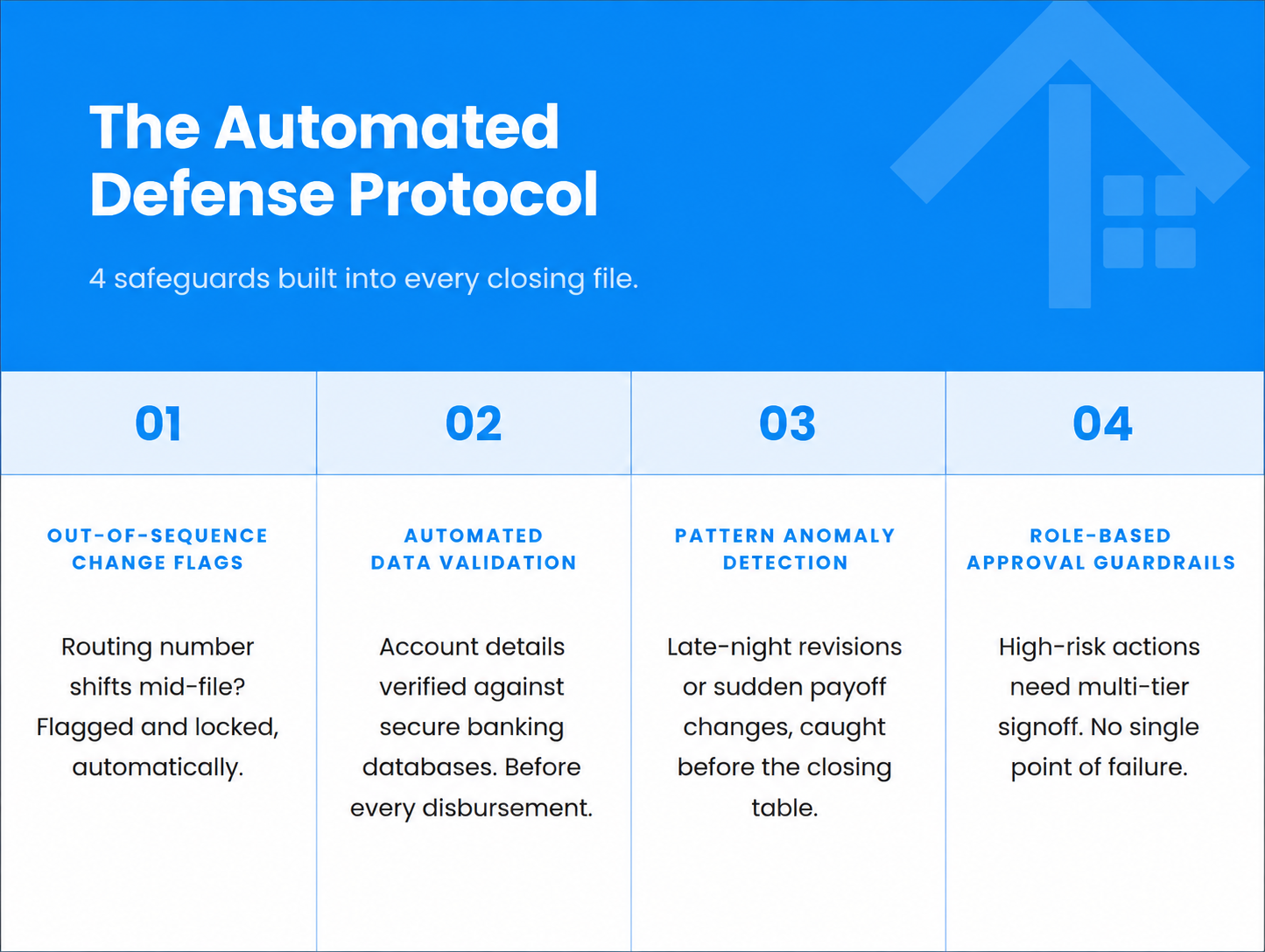
Instead of leaving wire safety to chance, an automated defense protocol changes the daily reality for your closing team:
- Out-of-Sequence Change Flags: The moment a wiring instruction, routing number, or payment destination shifts mid-file, the system flags the alteration instantly. If an update comes from an unverified domain or outside normal sequence, the file is automatically locked for disbursement.
- Automated Data Validation: Rather than requiring processors to manually cross-check bank details across multiple systems, the platform verifies routing numbers and account details against secure, pre-validated banking databases automatically.
- Pattern Anomaly Detection: The software monitors file updates for unusual activity—such as late-night wiring revisions, sudden changes to payoff entities, or mismatched contact details—surfacing potential risks long before the closing table.
Role-Based Approval Guardrails: High-liability actions, such as releasing final wires or approving midstream disbursement edits, require multi-tiered digital signoffs within the platform, eliminating single-point human failure.
Taking the Pressure Off Your Production Team
Preventing wire fraud should not be a secondary job layered onto an already exhausted escrow officer. When your software actively monitors transaction integrity in the background, your team no longer has to play full-time cyber detective while trying to manage closing logistics.
Automated security guardrails create a protective shield around your escrow accounts without adding unnecessary friction to your workflow. Processors can move files forward with confidence, knowing that out-of-sequence changes and suspicious updates will be caught and escalated before a single dollar leaves the bank.
Secure Your Escrow Pipeline
The threats targeting settlement operations are evolving fast, but your defense strategy does not have to rely on guesswork and high-stress manual checks. By building continuous AI validation into your daily closing workflows, you protect your escrow funds, maintain underwriter trust, and safeguard your agency's hard-earned reputation.
Ready to strengthen your escrow security and eliminate wire fraud vulnerabilities? Discover how AtClose brings proactive protection to your title production pipeline today.